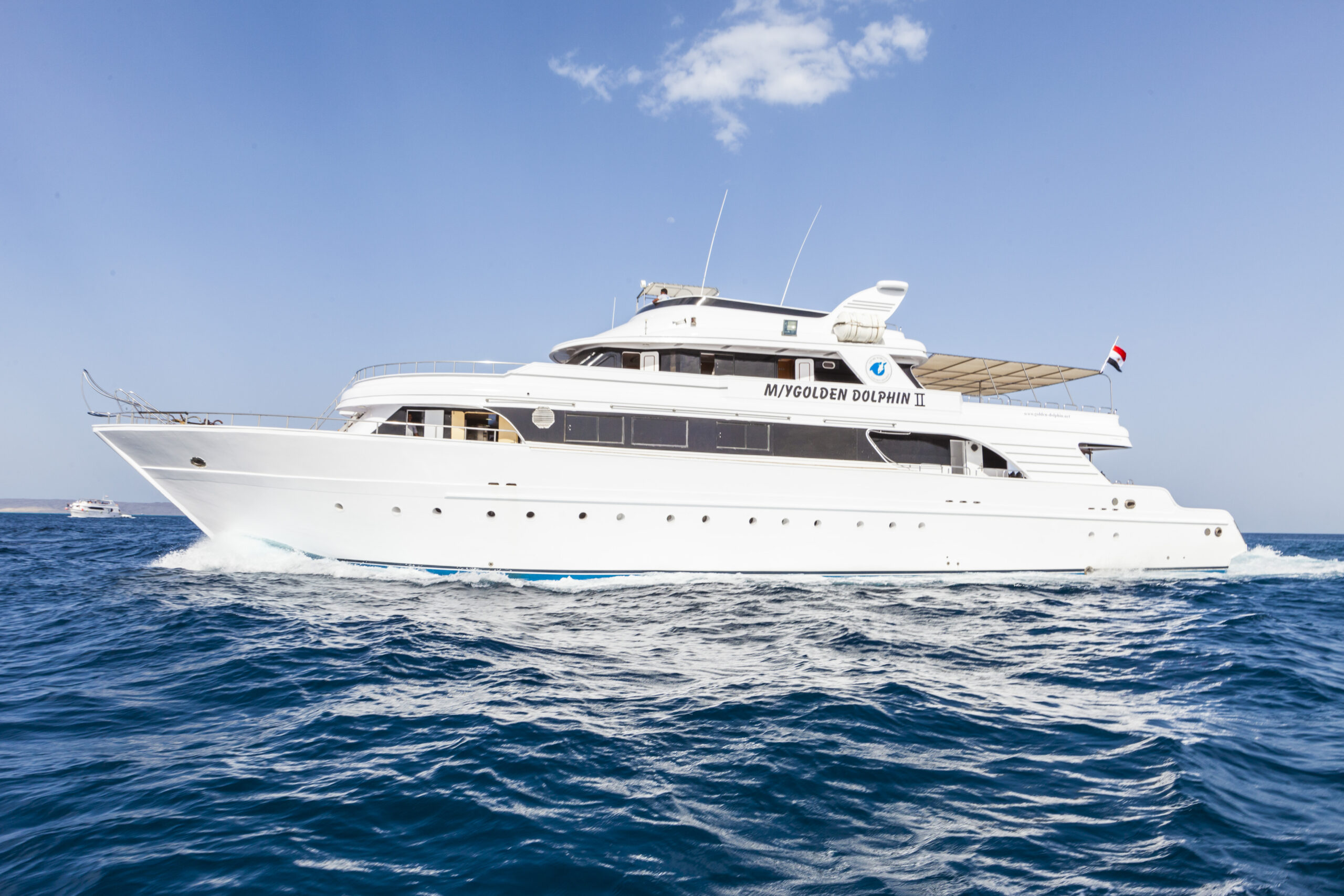
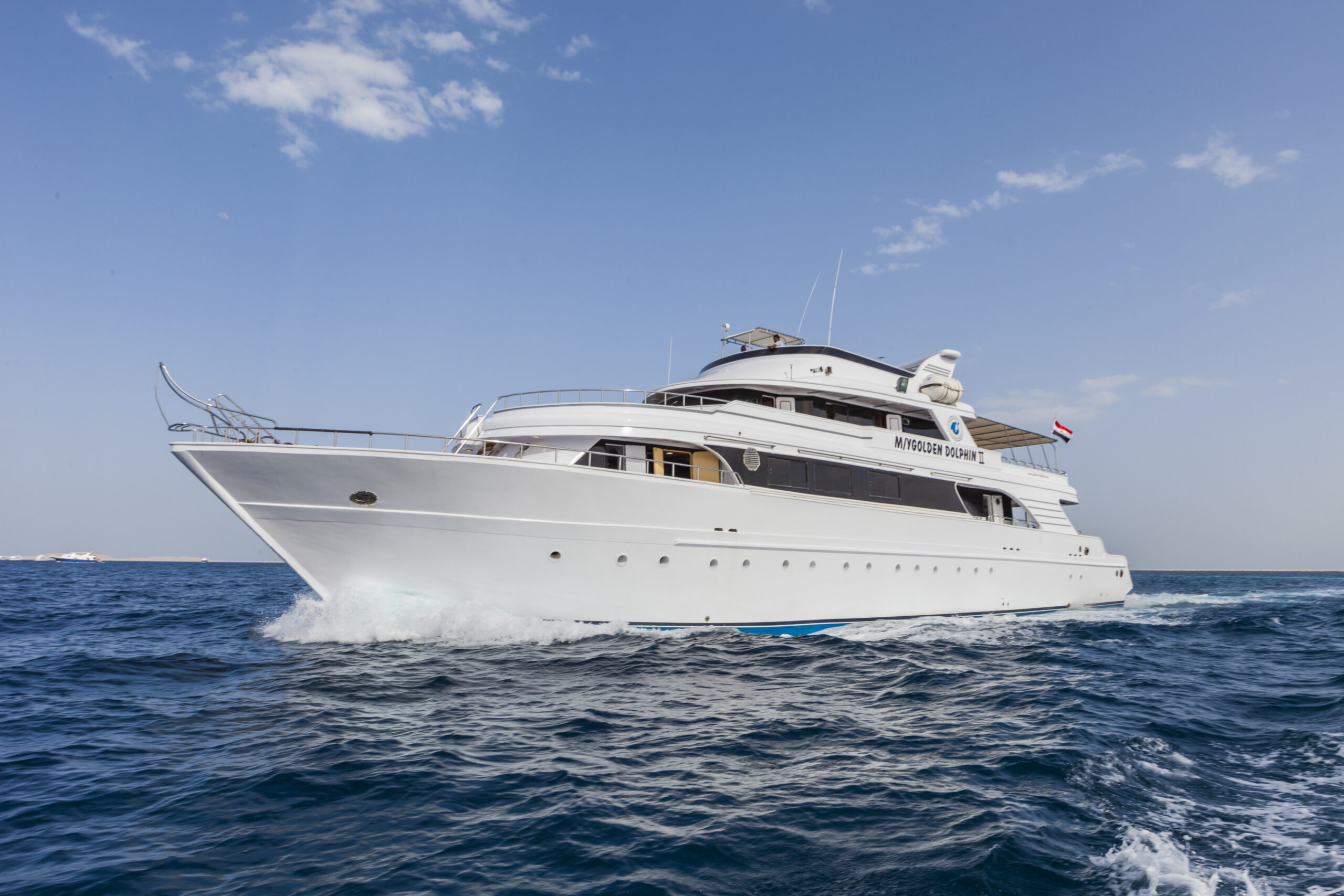
Golden Dolphin II
Liveaboard

Diving experience
The Golden Dolphin II set sail on its first safari in April 2006. It was built as the second ship in the Golden Dolphin fleet, taking into account all the experience, new ideas, and feedback from guests, guides, and crew.
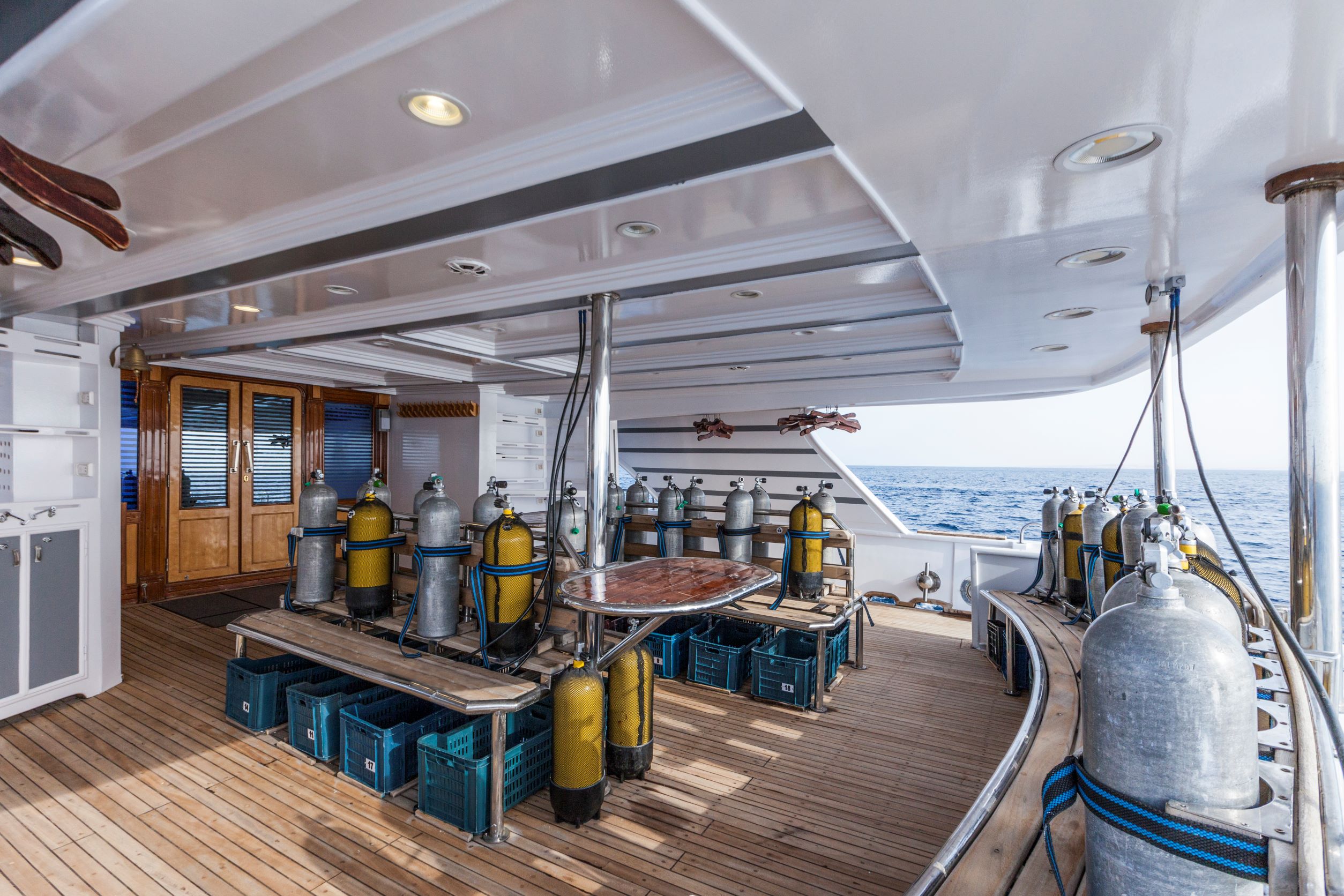
The dive deck and platform are super spacious, giving 20 divers all the room they could wish for!
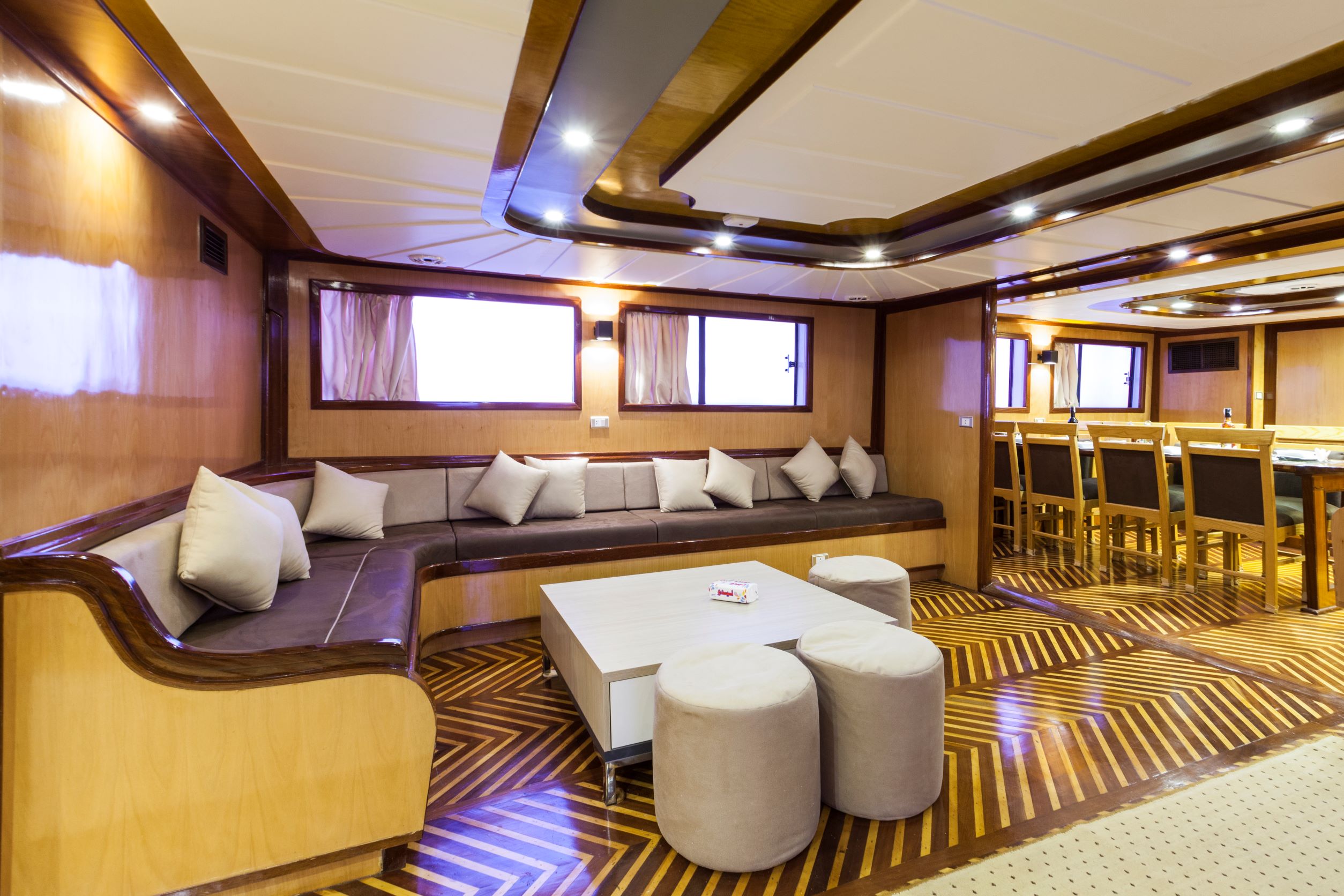
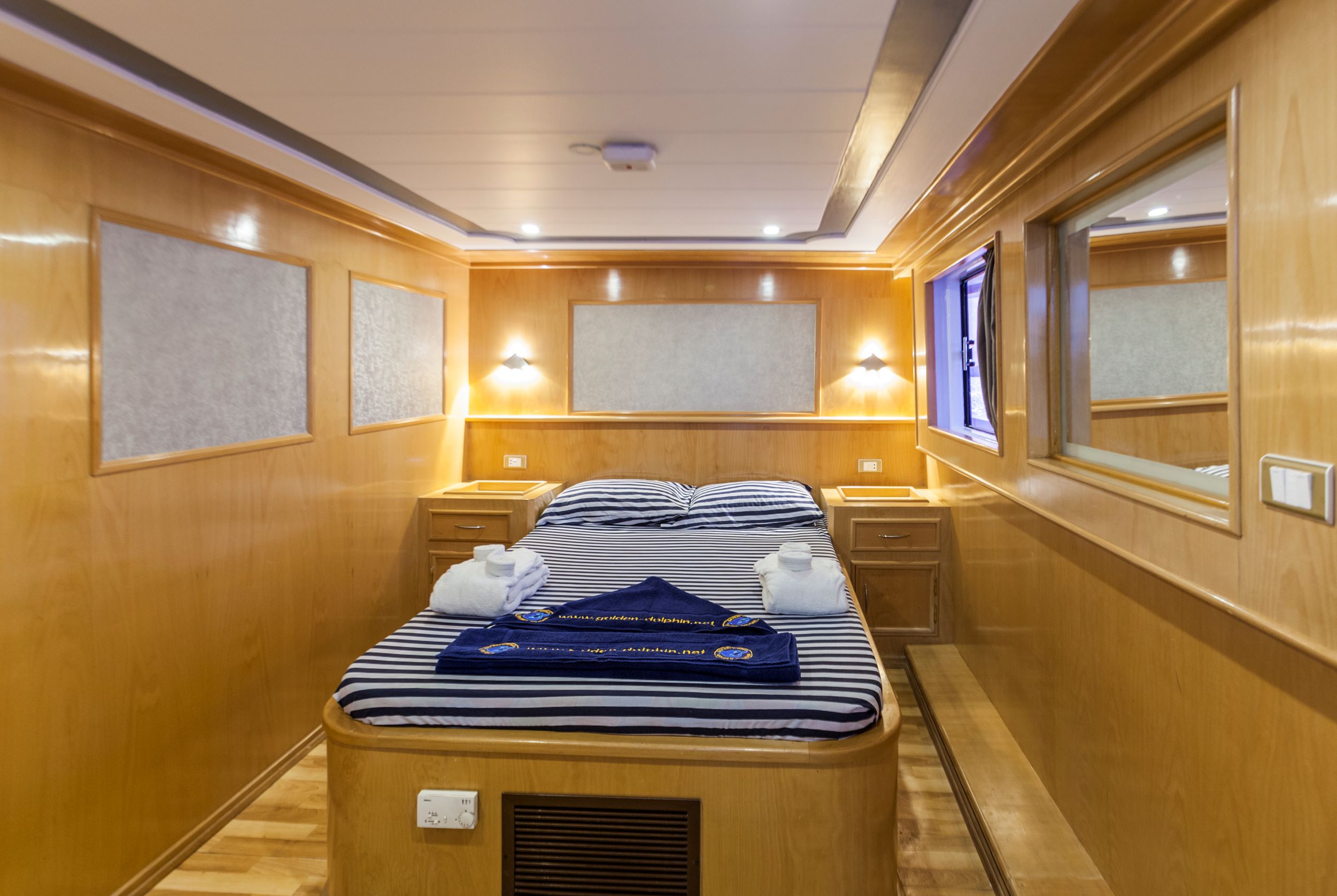
You'll find 10 comfy cabins onboard, each with air conditioning, a minibar, and its own bathroom. These, along with the huge three-part lounge and spacious sundecks, guarantee you'll get some pure relaxation between your dives.
CABINS
- 10 cabins with space for a total of 20 Guests
Upper Deck: 2 cabins with double beds
Lower Deck: 8 cabins with single bedsAll 10 air-conditioned cabins on the Golden Dolphin II come with a minibar and their own private bathroom, complete with a shower and toilet.
FACILITIES
- Lounge: Our spacious and super cozy lounge is split into three areas. It's got its own dining spot, plus a TV and sound system, and even a little computer corner for you to use.
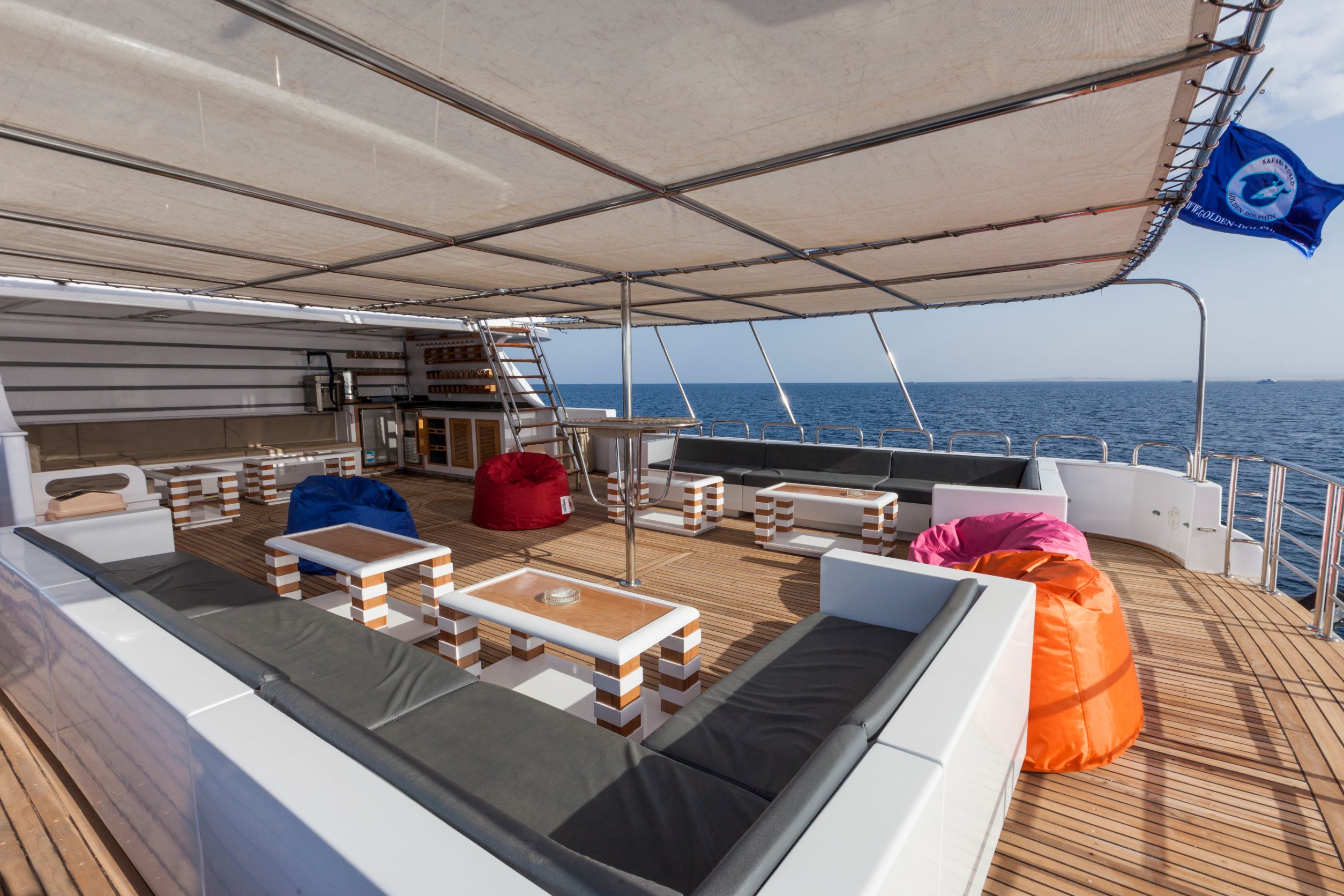
- Sundecks: Our two sundecks are perfect for chilling out and getting some pure relaxation between your dives.
DINING
- The dining area in the lounge is perfect for a cozy and delicious meal together, with plenty of space for all 20 guests.
We serve up typical Egyptian and international dishes. Plus, there's a Nespresso machine available – feel free to bring your favorite capsules from home!
TECHNICAL SPECS
- Year Built: 2005 / 2006
- Refurbished: 2016
- Length: 38 meters / Width: 8 meters
- Generators: 2 x 100 KW (230V) Perkins
- Engines: 2 x 750 HP Cummins K19
- Desalination Unit: 2 x 4,500l/day
- Compressors: 2 x L & W 280 EC; 1x Mattei LP ERC 507l
- 2 zodiacs with outboard engines
SAFETY
- You'll find 2 life rafts, life jackets, oxygen, and first aid gear on board. Plus, there are fire extinguishers in every cabin and in the main salon.
PAYMENT ON BOARD
- Euros, US Dollars, and Egyptian Pounds
- Sorry, we don't accept credit cards.
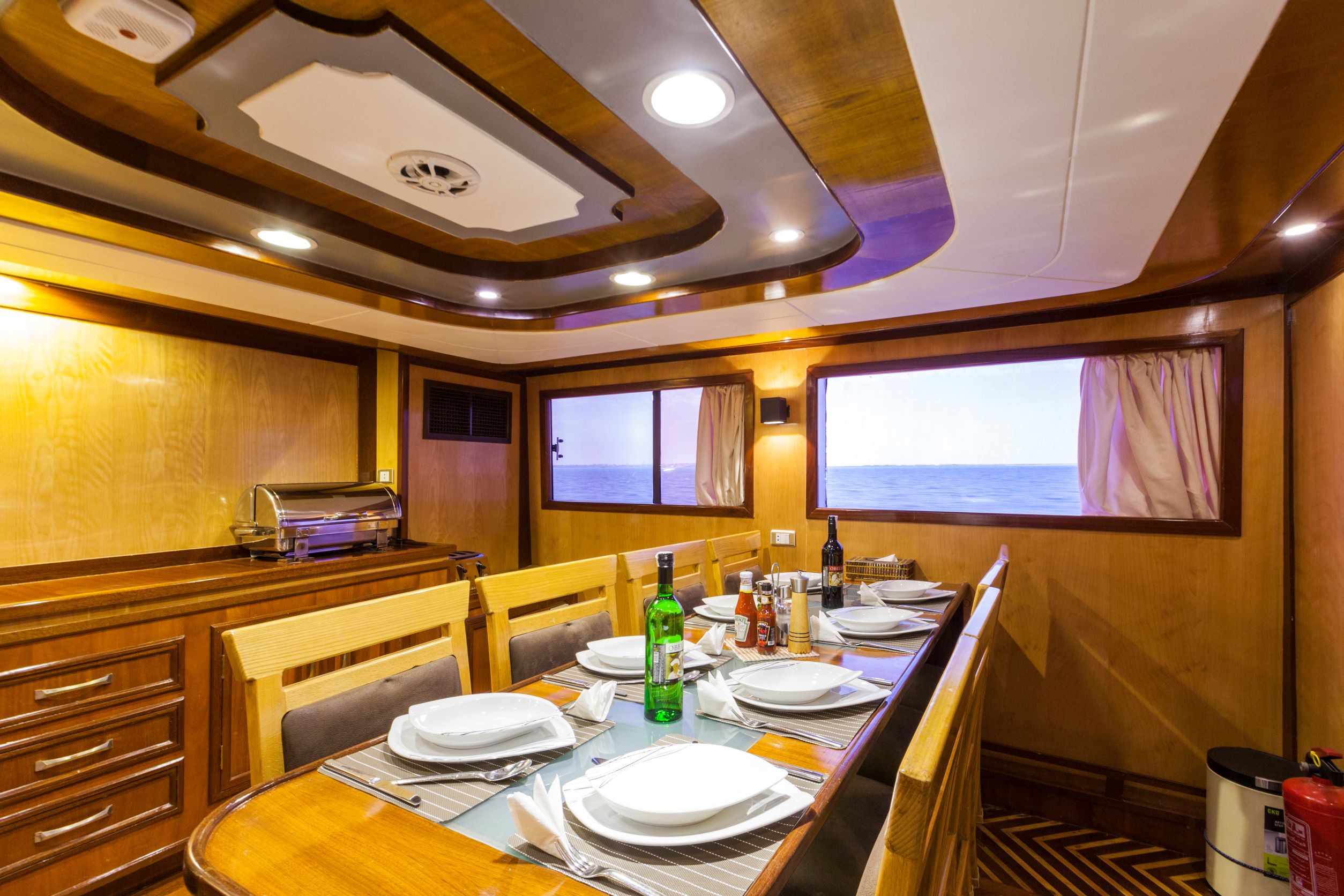
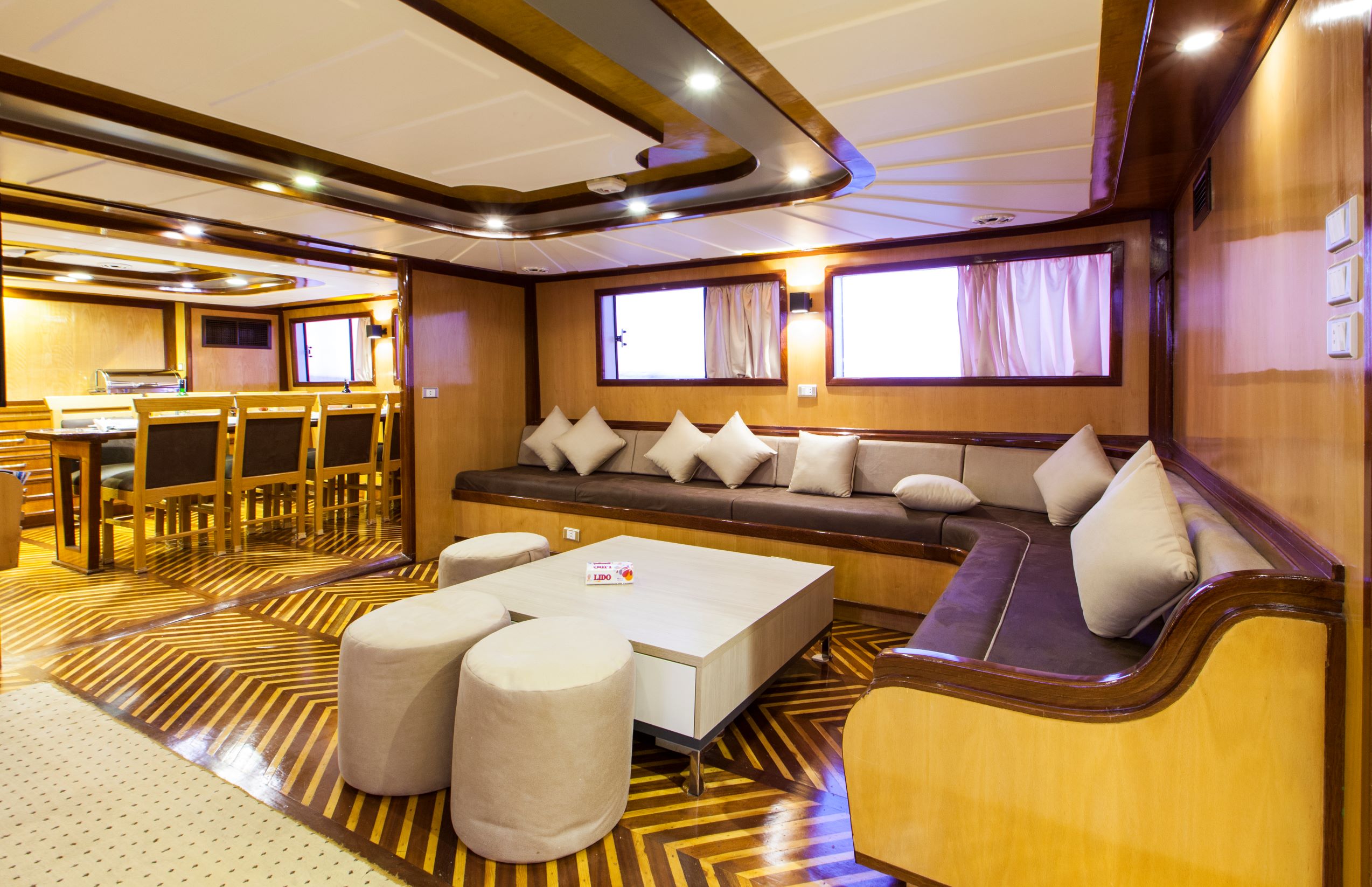

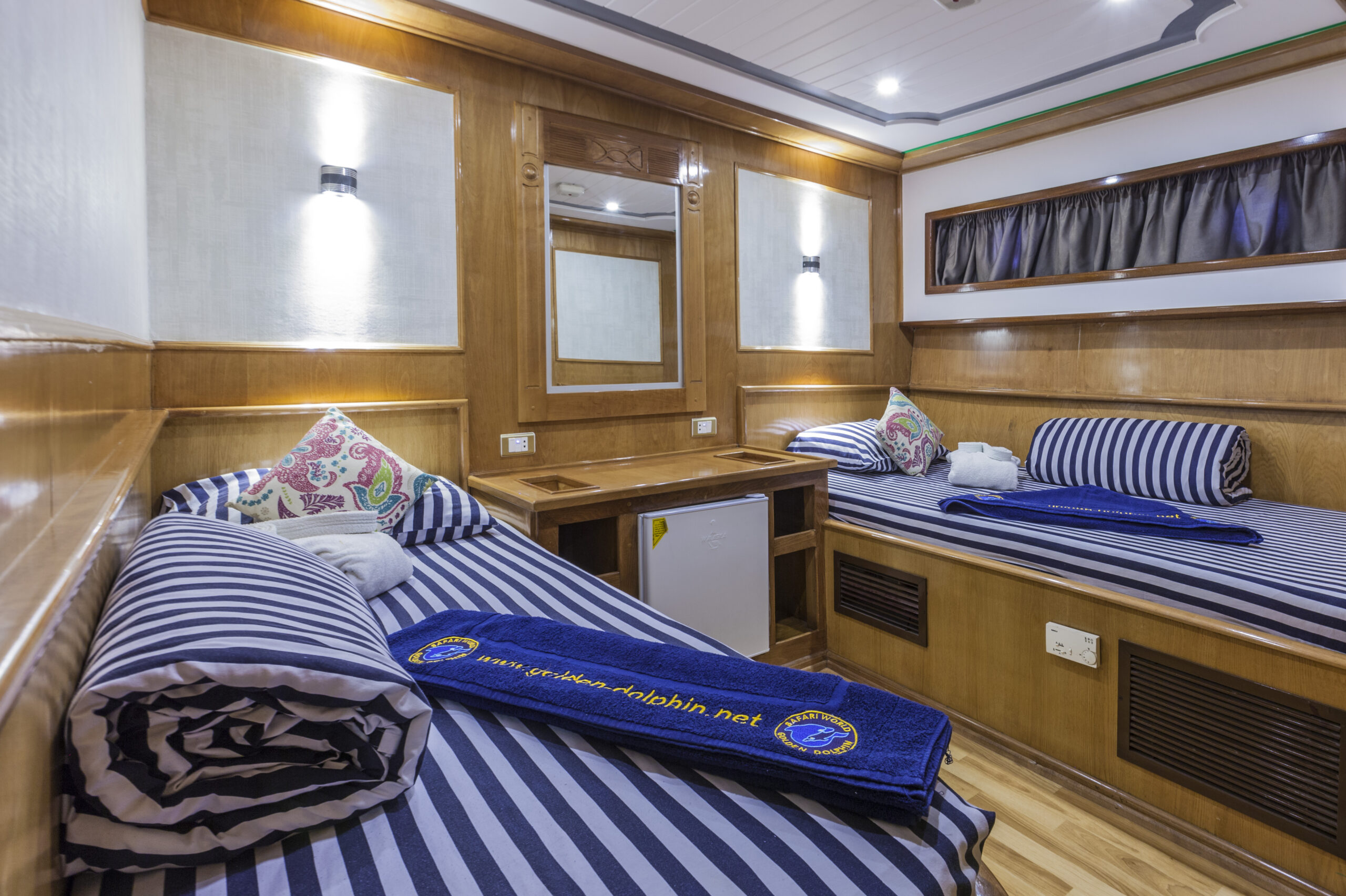
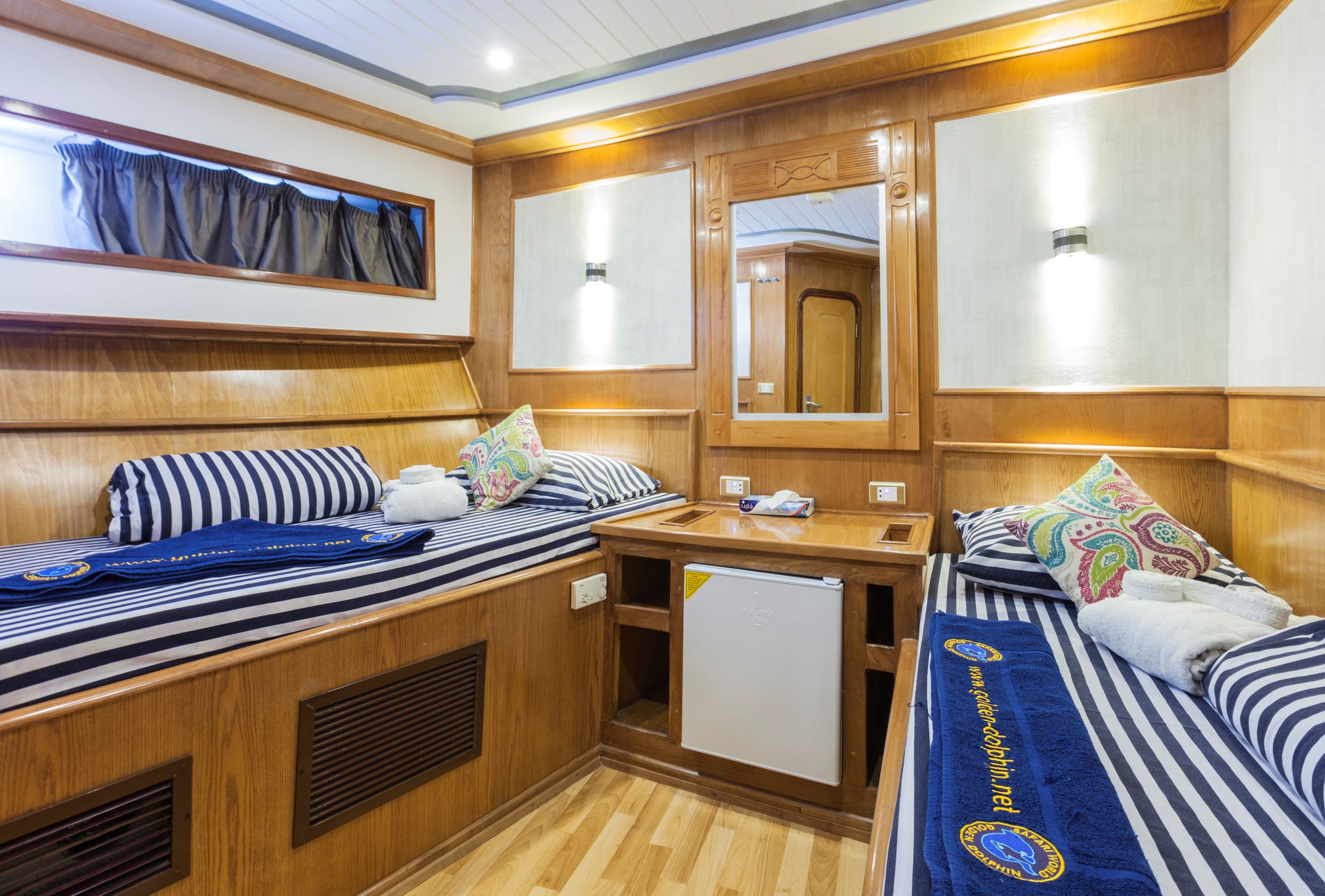
The Golden Dolphin II kicks off its awesome tours from Hurghada or Port Ghaleb in Marsa Alam. It visits all the famous dive spots in the Red Sea, making sure to show our guests the most beautiful and breathtaking dive sites around!
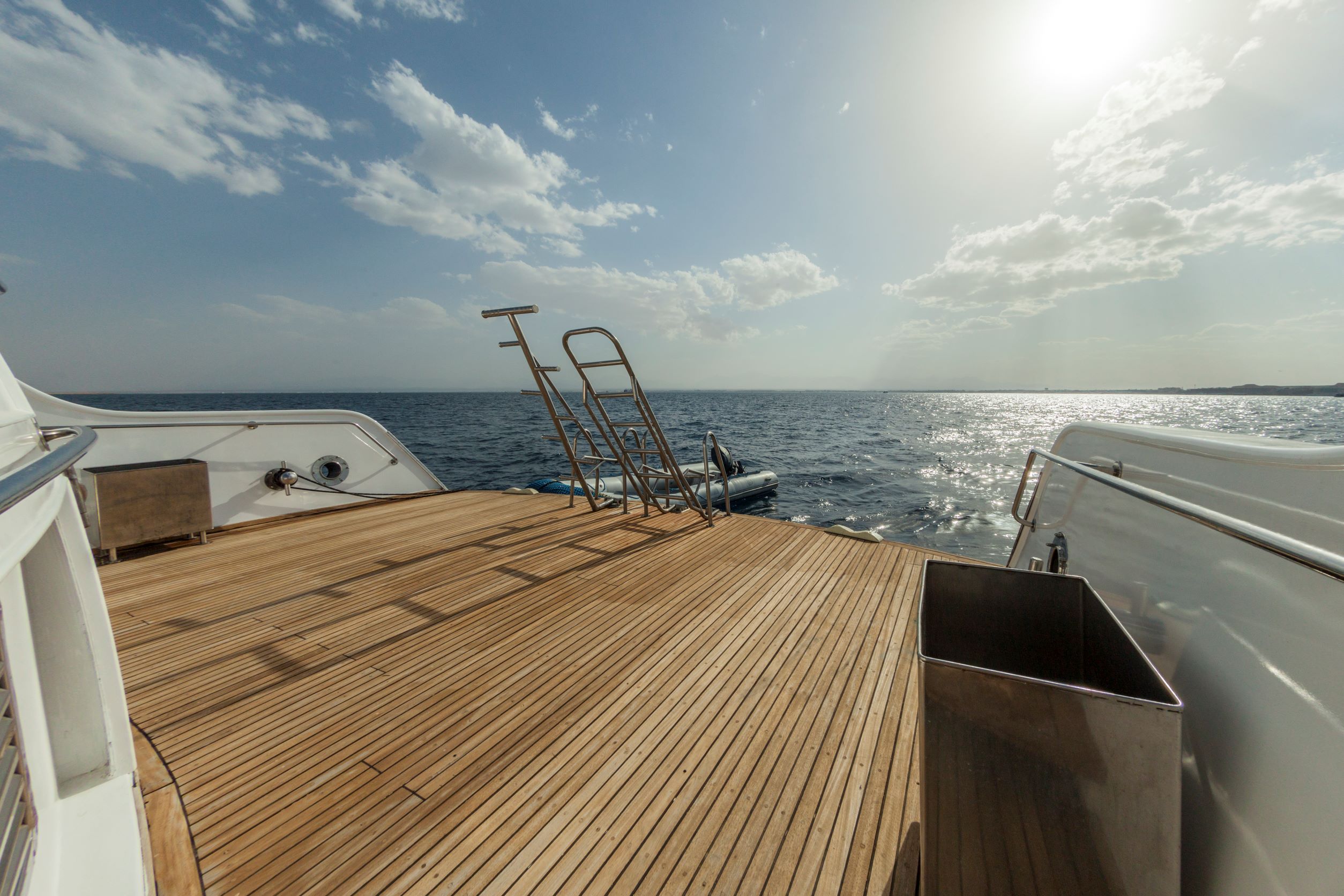
- Dive Deck: Our ship boasts a super spacious dive deck and platform, making it really easy to get in and out for your next amazing dive!
- Nitrox: If you're Nitrox certified, you can use it for free!
SAMPLE ROUTES
- North – Wreck Tour / North – SS Turkia / North – Straits of Tiran
- Brother Island – Daedalus – Elphinstone / Brother Islands – Daedalus – Fury Shoals
- Rocky Island – Zabargad – St. Johns
- Best of the Red Sea: Daedalus – Rocky Island – Zabargad – St. Johns – Elphinstone
- Deep South: St. Johns – Abu Fandera
- 2-Week Great Island Tour: Brother Islands – Daedalus – Rocky Island – Zabargad
- 2 Weeks: Straits of Tiran – Brother Islands – Daedalus – Rocky Island – Zabargad – Salem Express
You can check out the detailed itineraries, dates, and availability right below, and feel free to send us your inquiry for your next diving vacation anytime:

Routes and availability
The Golden Dolphin fleet explores all sorts of different routes in the Red Sea.
For more detailed info on routes, dates & availability, you can find it in the overview listed above, or feel free to ask anytime via office@maldivesandmore.com.
Here are a few route descriptions:
North – Wreck Tour
- The Thistlegorm, which means 'Blue Thistle' in German, is probably the Red Sea's most famous wreck. This English ship was heading to Egypt to resupply the British Africa Corps when, on the full moon night of October 6, 1941, it was attacked by a German bomber and sank. The wreck now sits upright on the seabed at 30 meters deep, and trust us, it's a sight that gets any diver's heart racing!
- There seems to be a bit of a curse on the Abu Nuhas reef, just north of Shedwan Island. Even though its lighthouse shines brightly, it's home to four super famous wrecks that draw divers from all over the globe!
- There's a cool story about the steam sailer Dunraven. It was carrying wool, cotton bales, and spices from Bombay to Newcastle when, on the night of April 22, 1876, it hit the reef edge at the south end of Shaab Mahmoud, caught fire, and sank.
- Ras Mohammed National Park is home to some amazing dive sites, like the JOLANDA and SHARK REEF. These two reefs are super close on a plateau that drops down over 700 meters! Thanks to its exposed spot and strong currents, this plateau is truly an 'aquarium' like no other.
North – SS Turkia
- The SS Turkia was built way back in 1909 by Earles Shipbuilding and Engineering Co. in Hull, England. This cargo ship, originally called Livorno, was 91 meters long, 13 meters wide, and weighed 1671 tons. It used to sail various trade routes around Northern Europe. Then, between 1920 and 1935, it was sold to Greece and got its new name. In May 1941, the SS Turkia was on its way from New York to Piraeus, loaded with explosives, vehicles, electrical cables, and weapons. It sank near the Suez Canal, and there are two theories about what happened: either a fire broke out on board, or it was hit by a bomb and went down. Lying between 10 and 24 meters deep, and beautifully covered in soft and hard corals, it's an incredible dive experience!
Deep South: St. Johns – Abu Fandera
- St. John's Cave, a chain of five reefs, totally lives up to its name! Umm Hararim is super cool with its unique cave system. In the shallower parts, surrounded by a gorgeous hard coral garden, the main reef on its southwest side is full of holes, just like Swiss cheese. Most of these passages are open towards the top, making them easy to dive through. They're covered in red coral, and the way the light plays on the bright sandy bottom is just magical. You'll spot hatchetfish hanging out in darker spots and blue-spotted rays digging for crabs in the sand... seriously, it's like a screensaver come to life!
- At Abu Fandera, dozens of ergs (reef blocks) at depths of 15m to 20m, covered in beautiful soft corals, are just waiting to spark your explorer's instinct.
Brother Islands – Elphinstone
- The Brother Islands are hands down some of the best dive spots on the planet! Rising steeply from the deep, these two small islands, Big Brother and Little Brother, sit all alone in the open Red Sea, about 60 km off the coast.
- Little Brother is absolutely bursting with an amazing variety of marine life! Get ready for some truly incredible drop-offs. To the north, a narrow, long plateau stretches from 7m down to over 42m, and diving there is always a bit of an adventure. You'll often spot hammerheads, and there's even a cleaning station for grey reef sharks. Big barracudas hang out in the current, ready to hunt, and huge Napoleon wrasse love to show off for divers. Silky sharks and even thresher sharks sometimes drop by. Especially in the south, you'll often see turtles, and a manta ray might just glide past almost unnoticed in the current. Hunting dolphins, tuna, and mackerel – anything is possible here!
- About a kilometer north of Little Brother, you'll find Big Brother. Right in the middle of the island, there's a lighthouse built in 1883. But the real highlight for any diver here is definitely a dive at the NUMIDIA wreck. This British steel and screw steamer was on its way from Glasgow to Bombay & Calcutta when it ran full speed onto the northern tip of the reef on the night of July 20, 1901. A few weeks later, the Numidia sank and now lies upright on the reef between 12m and 80m deep.
- Even though Elphinstone Reef has been (and still is) heavily dived in recent years because it's so close to the coast, it's still undoubtedly one of Egypt's most beautiful reefs and a 'must-do' for every diver! It's not super wide, but a long plateau gradually stretches down from 18m to 55m in the north. It's beautifully covered in corals, and it's worth keeping an eye out for big fish (like grey reef sharks, hammerheads, and whitetip sharks) before you drift along the breathtaking drop-off to the east or west, which is covered in gorgonians, wire corals, and various soft corals. The plateau in the south is a bit wider, covered in coral blocks, and turns into a drop-off at about 45m deep.
(Source: Golden Dolphin Safari World)